
NOSA 2026
Welcome to NOSA 2026
3-5 March in Lund.
Since its beginning in 1978, the Nordic Society for Aerosol Research (NOSA) has organised annual symposia, bringing together members from various institutes and research groups worldwide. NOSA provides a platform for experienced and early-career scientists to meet and exchange ideas.
The theme for NOSA 2026 is Impacts of Aerosol Science & Technology. Symposium topics: Aerosol Technology, Aerosols & Health, Atmospheric Aerosols and Impact of Aerosol Science










Keynote speakers
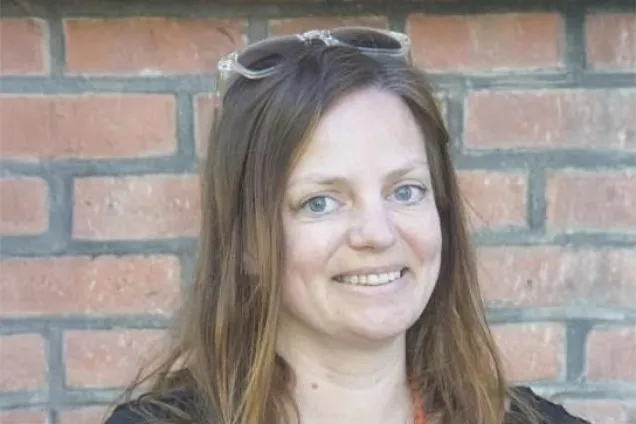
Air pollution policy - How does it work and what research are needed?
Ebba Malmqvist
Associate Professor, Lund University
Ebba Malmqvist is the chair of the Policy committee of International Society of Environmental Epidemiology and their WHO focal point. She works in the interface of research and policy and conduct epidemiological and health impact assessments of different policies and plans related to climate change and air pollution.
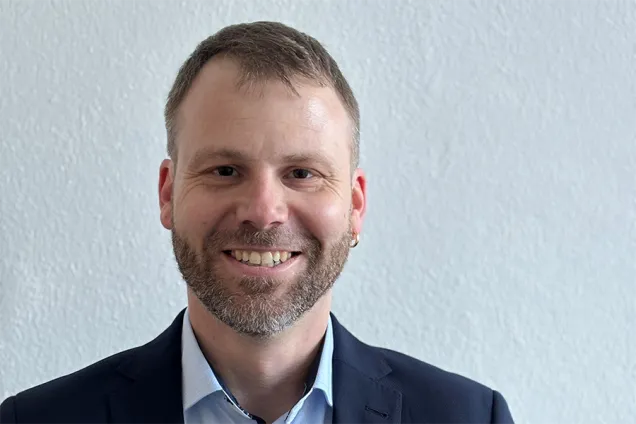
Chasing invisible killers using mass spectrometry, data science, and modelling
Kaspar Dällenbach
Group Head of Aerosol and Health, PSI Centre for Energy and Environmental Sciences
Kaspar Daellenbach is an internationally recognised scientist in the fields of particulate-matter (PM) source apportionment, aerosol chemical composition, and the health-relevant properties of atmospheric particles. As Group Head of Aerosol & Health at the Paul Scherrer Institut (PSI) within its Laboratory of Atmospheric Chemistry, he leads pioneering research on how the chemical origin and atmospheric transformation of aerosols influence their toxicity and impacts on public health. He has authored numerous high-impact peer-reviewed publications, including a landmark Nature study on the oxidative potential of PM in Europe. His research spans regions from Europe to China and India, integrating cutting-edge mass spectrometry, molecular-level data analysis, and exposure modelling to identify the most harmful aerosol sources and to inform effective mitigation strategies.
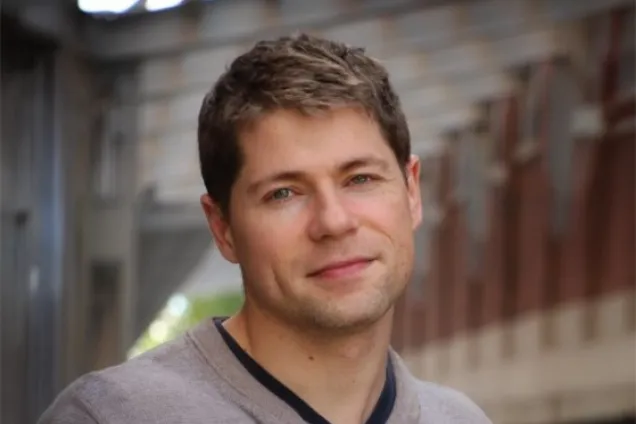
Particles and Droplets at High Speeds and Cryogenic Temperatures: “Far Out Applications of Aerosol Science”
Chris Hogan
James J. Ryan Professor and Department Head, University of Minnesota, Twin Cities.
His research group focuses largely on fundamental and applied research in aerosols, including the development of theories to describe transport and reactions in aerosols, the design of new measurement principles and instruments for aerosols, and the evaluation of HVAC control technologies. He has published more than 170 peer reviewed papers focusing in these areas, and is the editor-in-chief of the Journal of Aerosol Science.
Abstract for the keynote "Particles and Droplets at High Speeds and Cryogenic Temperatures"

Ultrafine particle emissions of modern vehicles and their impact on urban air quality
Topi Rönkkö
Professor, Tampere University
His research aim at understanding of the formation of particle emissions, their transformation in the atmosphere, and their effects on air quality, human health and climate. He sees that this information and knowledge is crucial when minimizing the anthropogenic air quality and climate effects.
Tutorial Speakers
Tutorial on synchrotron-based techniques for aerosol science
The NOSA tutorial on synchrotron-based techniques for aerosol science is organized in collaboration with MAX IV Laboratory, a Synchrotron facility in the outskirts of Lund. During the tutorial, four expert speakers will introduce various synchrotron-based methods and present examples of how these techniques have, and can be, applied in aerosol research. The event will take place at MAX IV and includes a guided visit to the facility.

Synchrotron X-ray Microscopy for Arctic Aerosol Research: Mapping Morphology and Reactive Nitrogen at the Single-Particle Scale
Xiangrui Kong
Associate Professor, University of Gothenburg
Xiangrui Kong conducts synchrotron-based research on aerosols particles and surfaces, specializing in scanning transmission X-ray microscopy (STXM) and ambient-pressure X-ray photoelectron spectroscopy (APXPS). His work focuses on surface-specific chemistry, including spontaneous redox processes, surface catalysis, and chemical morphology.

Chemical forms of metals in aerosols using XAS
Jenny Rissler
Associate Professor, Lund University
Jenny Rissler is a regular user at MAX IV, where she uses X-ray Absorption Spectroscopy (XAS) to investigate the chemical speciation of metals in aerosol particles. She specializes in emissions related to waste and recycling, particularly ash from waste incineration, with an emphasis on safe and efficient resource recovery.

Surface properties of free-flying aerosol particles using XPS
Calle Preger
Beamline scientist at MAXIV
Calle Preger specializes in in-flight aerosol experiments using synchrotron radiation. His expertise lies in experimental aerosol studies using x-ray photoelectron spectroscopy (XPS). He developed an aerosol sample-delivery system designed for investigating free-flying aerosol particles and gas molecules using XPS.

Gas-particle interactions observed with ambient pressure XPS
Jack Lin
Senior research fellow and Deputy director, group leader: Center for Atmospheric Research, University of Oulu
Jack Lin uses X-ray photoelectron spectroscopy to study the surfaces of atmospheric aerosol particle and droplet models. He has contributed to the development and commissioning of liquid jet, ambient pressure XPS, and in-flight aerosol setups for atmospheric research at the HIPPIE, FinEstBeAMS, and SPECIES beamlines at MAX IV.
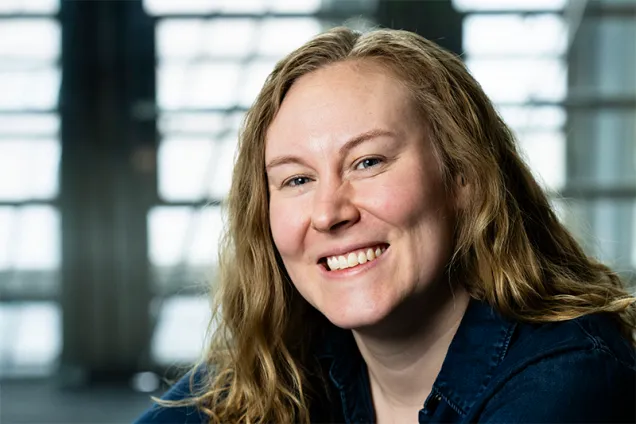
Molecular-level atmospheric science
Nanna Myllys, Docent in Atmospheric Science, University of Helsinki
Nanna has a MSc in Chemistry and a PhD in Physics. She is an academy research fellow (2022) and an ERC starting grantee (2024). Nanna leads a Molecular Level Atmospheric Science group, which employs various theoretical and experimental tools to study atmospheric oxidation chemistry and new-particle formation.
Contact
For questions related to the scientific and technical organization of the NOSA 2026 Symposium, please contact Christina Isaxon, christina [dot] isaxon [at] design [dot] lth [dot] se (christina[dot]isaxon[at]design[dot]lth[dot]se)